Parotid Gland Swelling: Parotitis, Tumours and Parotid Cancer

Swelling under the jaw can feel disconcerting, especially if it appears unexpectedly or begins to affect eating and speech. While there are several possible causes, one commonly overlooked culprit is a problem with the parotid gland, one of the body’s major salivary glands.


Dr Thomas Ho

Senior Consultant General and Head & Neck Surgeon, Accredited Surgical Oncologist
MBBS(Sydney), MMed(Surg), AFRCS(Ireland), FRCS(Edinburgh), FAMS(General Surgery)

Dr Thomas Ho Gland Checkup

What is the Parotid Gland and What Does It Do?

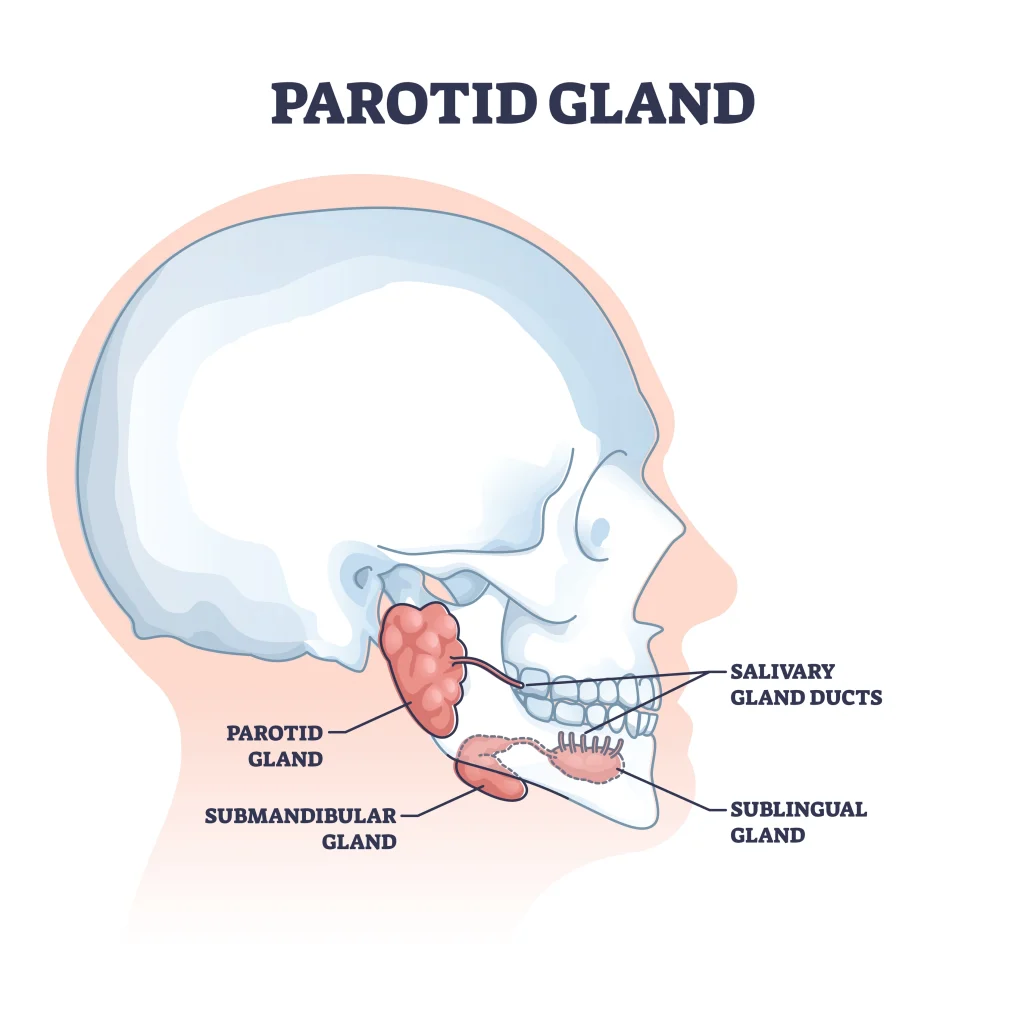
Anatomical diagram showing the location of the parotid glands in front of and below the ears, extending toward the jawline

The parotid glands are the largest salivary glands in the face. Their primary role is to produce saliva, which assists in breaking down food during digestion, keeping the mouth moist and helping you enunciate clearly.

Every time you eat, smell food, or even think about eating, your parotid glands are stimulated to produce saliva. This flows into your mouth through a small tube called the parotid duct.

The glands sit in front of and below the ears, extending toward the jawline, which is why any swelling or enlargement tends to be visible along the jaw.

The Specialist Leading Your Care

Dr Thomas Ho

Medical Director, Senior Consultant Head & Neck Surgeon
20+ Years of Clinical Experience
MBBS(Sydney), MMed(Surg), AFRCS(Ireland), FRCS(Edinburgh), FAMS(General Surgery), FSSO(USA)

Dr. Thomas Ho is a distinguished surgeon well known for his expertise in Cancer Surgery, especially in the field of Head and Neck cancers as well as Abdominal and Digestive cancers. In 2009 he was awarded a MOH scholarship and completed a Surgical Oncology Fellowship in Canada, becoming one of only a handful of surgeons in Singapore with this recognition.

Prior to private practice, Dr. Ho founded the Head and Neck Surgery and Surgical Oncology service at Tan Tock Seng Hospital. Dr. Ho is experienced in laparoscopic (keyhole) and robotic-assisted surgery, which he routinely employs in the treatment of thyroid cancer, colorectal cancer, hernias, gallbladder diseases, adrenal and spleen disorders.

Why Does Parotid Gland Swelling Occur?

Swelling occurs when the normal production or flow of saliva is disrupted, leading to inflammation, pressure build-up or enlargement of the gland. Common underlying causes include:

Cause What Happens
Salivary duct stones (sialoliths) Calcified deposits block saliva flow, causing it to back up and the gland to swell, often most noticeable during mealtimes.
Parotitis (bacterial or viral infection) Inflammation of the parotid gland — known as parotitis — leads to pain, swelling and sometimes fever or discharge. Viral parotitis includes mumps.
Tumours (benign or cancerous) Growths can enlarge the gland, presenting as a persistent, painless lump. Requires prompt evaluation.
Reduced saliva flow Dehydration, certain medications or systemic conditions can thicken saliva and increase the risk of blockage.
Autoimmune conditions Disorders such as Sjögren's syndrome cause chronic inflammation and dryness of the salivary glands.
Procedure When It Is Indicated
Salivary stone removal Calcified stone blocking the parotid duct, causing recurrent mealtime swelling and pain.
Partial parotidectomy Removal of part of the parotid gland, used for localised tumours or chronic structural disease.
Total parotidectomy Complete removal of the gland. Necessary when cancer is confirmed or disease involves the full gland.

For a full overview of salivary gland conditions we treat, from stones and infections to tumours, visit our salivary gland surgery page.

Concerned about a parotid gland disorder?

Book a consultation with Dr Thomas Ho to discuss your condition and treatment options.
help center

Frequently asked questions

The swelling itself is not contagious. However, viral parotitis caused by mumps is contagious and can spread through saliva or respiratory droplets. Bacterial parotitis and swelling caused by stones or tumours are not contagious.

Mild cases caused by dehydration or viral infection may resolve with rest and hydration. However, swelling caused by salivary stones, bacterial infection or a tumour will not resolve without treatment. Any swelling lasting more than two weeks should be assessed by a specialist.

Both are major salivary glands but are located in different areas. The parotid gland sits in front of and below the ear, while the submandibular gland is located directly under the jaw. A lump near the ear is more likely parotid in origin; a lump directly under the chin or jaw may involve the submandibular gland.

Temporary facial weakness is possible after parotid surgery due to the proximity of the facial nerve. Permanent damage is uncommon when surgery is performed by an experienced head and neck surgeon. Your surgeon will discuss this risk with you prior to any procedure.

Parotid surgery performed in a private hospital in Singapore may be covered by an Integrated Shield Plan and Medisave, depending on the diagnosis and insurer. Thomas Ho Surgery assists patients with insurance coordination and pre-authorisation where applicable.

Diagnosis typically involves a clinical examination, followed by imaging such as an ultrasound or MRI to assess the size and nature of the lump. A fine needle aspiration cytology (FNAC) may also be performed to sample cells from the lump and determine whether it is benign or malignant.

Early detection

Get Yourself Screened

The benefit of detecting surgical conditions early is to enable less invasive and extensive surgery while achieving the best results.

For your peace of mind

Wide Insurance Coverage

We are on the panel of most private insurance providers and are also accredited to process your Medisave claims.

References

  1. MSD Manuals. Salivary Gland Disorders.
  2. Goker F, et al. (2022). Solitary fibrous tumor of parotid gland: a case report and short review of literature. European Review for Medical and Pharmacological Sciences, 26(3 Suppl), 45–50. doi:10.26355/eurrev_202212_30794

Dedicated support with claims and insurer coordination

Our team assists with insurance claims and insurer coordination, including documentation and pre-authorisation requirements where applicable. Insurers not listed may still be supported.

Please contact our team for assistance with insurer coordination.

Have a health concern?
Contact us today.

We understand your anxieties and we’re here to support you throughout your health journey. If you would like to book an appointment or seek a second opinion, reach out to us through our enquiry form or give us a call at +65 6261 8311